Sunday, May 19, 2013

Amazing Times

I can't say that I've had too many great training/regatta trips in my life but this was probably the best. Reason is, our crew was tight, we enjoyed each other's company, and we raced for one another. Of course this Dad Vail regatta was one of the toughest I have heard of but that didn't mean we were out of sight. During the actual tune up before the regatta in South Jersey, we started out a little frustrated which usually happens when you drive over 10 hours in a van with little space. As the days went on and the gap was closing between us and the Schuykill, we found more speed and confidence. For me it is imperative to leave that lake on a good note. The trip itself was a lot of fun. We stayed in Brigantine at an alumni's parents' house aka kid heaven! A lot to keep us occupied for sure. On the last day, we got to walk around the casinos and the AC boardwalk to get some air. Why would you let us go on a boardwalk with a 99 cents store? I don't know!

The regatta itself was nerve-wracking. We started the heats with Drexel (Dad Vail champs) knowing that only one could advance straight to the semis. The reps were classic Philly organization with the 3 fastest boats in one rep and all other no name schools having the race of their lifetime winning 10 seconds slower than us. Knowing that Bucknell and Purdue were going to go for first place, we had to go for it as it were a final. Bucknell moved through us and Purdue nipped us by 0.3 which we had done to them at SIRA. I cannot stand letting that team beat us, especially after last year! But we were heading to the semis with FIT and Grand Valley, with top two advancing to the final. Attainable? Yes. Were we ready yet, apparently not. We had a great race, but it wasn't enough. Making another B final was definitely not part of my vision and I was angry, but the B final was going to be just as tough: Temple, Purdue, and Bucknell. We were in lane 3 and this time, we had decided that enough was enough and that we needed to stop being so passive about our racing. This is how the final went.

We're sitting at the blocks, lane 3. Temple up on us (there is a turn on this course), Purdue on our left, and all the others to me were just there to fill in. I remember telling myself that we needed to hit the start well enough to stay ahead. This time we were ready at the start. Beep! Temple and us took off real well. I saw them take a few inches and I was not happy so we kept the rating high. I had never wanted to see that damn bridge so much in my life. When we did, our move was so well done that we took an entire length on Temple. I saw them struggle, I gave up hope for them. I switched my focus back to the boat making sure that the black and yellow would not come back up on us. Trust me, they tried, and we made it hell for them. I cannot find the words that represent or describe the emotions in every move we took, but it felt good. Our plan was finally working, on the last race. They pushed us, and we said no until the very last stroke. I was so content with my mates. 5 seconds on Temple (no one likes them!) and over 2 seconds on Purdue, which made it that much sweeter. I remember feeling the extremes, pain and happiness, with a touch of accomplishment. Once I came back to reality, we spoke to Drexel and found out they had won as well as FIT finishing 3rd. What a great moment! We were proud that they had won. Everyone on the course happy we had won as well.

After a long trip back to Jax, we took two days to rest, allowing me to go home, to see friends and family. I think that was much needed for me, it took a huge load off my shoulders. But it was time to come back to the boathouse and race within ourselves to see who was going to represent the dolphins in the IRA 4+. Seat racing is probably my favorite thing to do. I might not put up great numbers on the erg, but when it comes to the water I love it. Adjusting to each crew and pushing the limits, my limits, their limits. I wanted to make a statement day one and did throughout the week. So the final crew going will be David WAUGH (cox), Preston WEINARD, Scott WAITLEY, Brian COSMILLO, and I. The others (Maycee DIONEDA, Andrew STEBBINS, Chase ROWE, Jeremy SOBIECH, Shane KENNEDY, Nathan ESTERLINE) who put up a good fight and have a lot to be proud of, are staying to keep us and themselves fit and race ready. This is super exciting and nerve-pounding, but if it wasn't would we be doing it? Nah!

We will be heading to Sacramento on the 29th. Thank you to the coaches and teammates for fundraising, and especially the alumni for being such great supporters. We will make you proud!
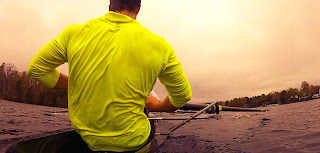
For now, back to training. Enjoy the pictures from the last few weeks!




Saturday, May 4, 2013

Last Ones Standing

It's been a while since I have written about how the our crew and I have been doing so I'll play catch up for a second. We have been racing three main boats: V8, F8, and V4. We had different boats and line-ups throughout the beginning of the year until spring break where everyone was placed into seats that mirrored their racing. At FIRA, we all mostly won our events making it our 8th consecutive title win. At SIRA, the V8 and F8 finished 5th while the V4 won their B final, barely missing out the A final the day before. At MAAC,  every boat won their event.
We are now coming up to the last week of training until Dad Vails. We have been putting in a lot of solid meters, not always done to our liking, but good boat speed has been found. The frosh have been pushing back making it a lot better for our training instead of training by ourselves. The four has been showing a lot of good speed and it should be interesting to see how they stack up against the 30+ crews next week. The weather in Jax has been crap but we've been dealing with it well, knowing that there is always a good chance we could run into it in Philly. But seriously, it has been raining for 4 straight days now, WHAT THE HELL!? Today was our last practice on the St. Johns as the seniors put in their last last strokes in, and hours at JU by attending their graduation ceremony. By tomorrow morning, we will all be on the road up to New Jersey where we have our pre-race tune up sessions on Lake Lenape. Usually the wind isn't always our friend there, but it is quiet and a good spot for our last few strokes. I'm not going to lie, this has definitely been the most intimidating season so far since FIT has reached new boundaries of speed, as well as UVA and Drexel making as much noise in the community. But if it wasn't hard to get to the podium and final, then no one would even bother. There are going to be a lot of fast crews who might be all in the same minuscules seconds so these next few days will be crucial to make sure we stay ahead of them. There are other plans for the future but that will be spoken on a later post. 

Friday, January 18, 2013

That Steady State Life


As I read literature from the past decades, from different countries about rowing, everyone seems to be looking for some kind of answer or secret way to be fast. The funny part is that credible people who obviously have been successful as rowers or coaches post the simple answer in between forum posts or small comments. I’m not going to dwell any longer because the main answer is steady states. We all know how training goes and that steady states aren’t the only sessions you will have during the week but they are the most important. I’m going to give some history about this training and how it is used in different places on top of the positive and negative consequences.

I know being credible in articles means having other articles or literature backing you up but I don’t have that; I only have the stories from all the rowers I have grown up next to who were on the world rowing stage during the 70’s, 80’s, and 90’s. A lot of western countries always blame the eastern countries’ success in sports on doping and other techniques that I won’t speak about which is in part true, BUT they were also very good at getting their training right. Having to prove something to the left side of the iron curtain, they spent a lot of money and time finding what the right ways to train for the best performance outcomes. I’m not going to lie, to do the amount of training they did also probably required a little help. E. MUND, who took up the French national team rowing coach position in the 90’s brought a whole new vibe to the hexagon’s long lineage of rowers after leaving East Germany right before the wall came down. Besides his bag, he brought intensity and steady states with him to an “alright” team. If you look at France's history you’ll see that from 1968 to 1992 they did not get one medal on the Olympic stage but as soon as he took over, they then achieved 7 medals within the next two Games. One of his rowers in the lightweight men’s four from the Sydney games, Yves HOCDE  , has told me about the long steady states they used to do which is most of the workouts published by the federation for all the programs, called B1 {2-3x30’ @18 sr} and B2 {2-3x20’ @20 sr} and how they had to apply almost race-like pressure during them so that by the time they actually did race pieces they would have the power and the rate would really be the only thing that they had to work on. Other like Casey BAKER , who had to train by himself in Florida while everyone up north had each other to race or train with all year, just logged in large amounts of meters and then show up a month before racing to test out the waters and was at the top level with guys like Brad Lewis. My mom, Monique COUPAT , who has always emphasized the long rows to build a strong base and it showed by being at the top of the women’s squad. Or even Xeno MULLER who has kindly posted on every social network how amazingly important those workouts are for top-notch success such as Olympic medals.

Like I said before, in France, every club pretty much follows the same program set out by the federation since everyone goes to the same regattas. Much of my training was those previously stated B1 and B2 so when it came time to move to Florida, steady states didn’t appear as common; at least on the junior level. It really seemed to be all about testing rather than building, and when it came down to it, university rowing is all about it. Now it depends on the teams too, but these long workouts can be accomplished on the ergo like on the water, and you definitely need to trust the rowers around you when it comes to water training because who knows if they are actually getting the work in. Every country has different ideas about it, some spend more time on the water, some on the ergo, and some just don’t do enough of it which is apparent when it comes down to the last regatta. There is always a debate on how steady states should be done though which I enjoy reading because it wouldn’t be as fun and interesting if everyone knew everything. I try to read these posts with an open mind so that I can take in what might be new to me, but as I read, I see a bunch of people talking about this and that while successful rowers/coaches who don’t even have to put their “secrets” out there are just laying it down for everyone to see, and still get confronted. I don’t know if some people can’t read and comprehend but whatever. So most countries have a plan that everyone respects and understands, but on the other hand you have the U.S. who apparently has a million different ways to win and perform. Lets be real now, for every endurance sport like cycling and rowing, it’s the same damn idea and it is written in red all over the internet so just stop trying to get out of +60’ workout because you don’t feel like putting in the time to be good!

The last point of this post is the consequences. I’d rate this training 90% good and 10% bad, and the only reason I’m saying that is because of how people use it. Most rowers will do their steady states with the help of a heart rate monitor because it will be accurate no matter how you are feeling. Doing these workouts allows you to build that foundation work so that by the time harder workouts come around, you won’t be behind. There is a reason for this on a molecular level that I won’t go too into depth with. Simply, the motor neurons who transport the signals to activate muscle fibers have myelin sheath surrounding them, and the amount of right work you do will make that “blanket” thicker transporting the signals faster. Also more mitochondria (power cell) are being produced helping energy production faster and better. It’s hard to explain without going deeper but I hope you can understand. You almost have to understand that sometimes doing a little less than what feels like working is actually better. This very good article explains how steady states are good until you start going into the no-man’s land that is created between SS and vigorous workouts. It’s really easy to get caught in a little competition with your teammates and pushing harder than usual which will end up tiring you more and back firing on a longer run most likely creating a plateau.

In the end, it’s plain and simple, follow what your coaches tell you to do and respect the splits and heart rates because it’s prescribed for a reason. No one wants to regress especially at university level when we only have 4 years. Steady states are where it’s at so get a ton in and I assure you it will take you beyond what you have done. It’s nothing special and it works for every endurance sport if you are training on the side or moving on to something different; except cycling, who knows how long that will last! ;)

Sunday, September 30, 2012

Flexibility

The ability of a muscle or extremity to relax and yield to stretch and stress forces; the ROM of a joint, affected by muscles, tendons, ligaments, bones, and periarticular structures.

This is probably the most difficult topic to talk about, reason is, each person adapts and is composed differently, but also has opposite ideas. It does provides efficiency to the person and how they articulate and move. That being said, I'm going to talk about my experience with a few different ways to stretch and their affects as well as published research. .

First, lets talk about how I've reacted to stretching and what were the results. Since I've been in college and rowing, I obviously have been rowing and training a lot more and at higher level. The one thing that has made me realize the importance of flexibility and stretching, was a small injury. I wouldn't really call it an injury though since it never put me out of business. This "injury" was actually the accumulation of stress in my hamstrings, especially the right side. I thought to myself why am I hurting so badly in my back when I do enough stretching to prevent hurting myself. It was really my hamstrings pulling on the all the superior (above) muscles and causing pain there. To treat this problem, I had to spend more time stretching in different ways throughout my whole body so that this wouldn't happen again. Now back to types of stretching that I have experienced. There are two main ones that have worked in different ways for me. the primary one is 10-15 second holds and making sure that the muscle you want to affect is feeling the pull. Of course you do not want to make it hurt but still make it a noticeable extension. I like to work from the neck down because of how the body is designed since everything is mostly linked to one another like I previously said with my back and hamstrings. I first began to do this when I attended a high performance sculling camp in Tempe, AZ for the national team and it has worked well since then. As soon as I go through most of the major muscle groups and some specific small ones, I go back with a elastic band and find areas that I usually wouldn't be able to stretch in a classic way or to get the full muscle stretched. For example, the legs. I go through the hamstrings, illiotibial bands (IT band), and the inside of the legs. I put a lot of emphasis on that area because of the large amount of load and strain applied around the abdomino-pubic area. To start those stretches off, I like to use the foam roll when I can to really get the waste out of the muscle fibers for less soreness and more flexibility. Some people don't consider that part of a flexibility pattern but I feel so much more release out of the muscle afterwards. The second type of stretching has a more repetitive style to it. While training for trials this summer, I was rowing with a guy who stretched this way and had made his back problems vanish because of it. It consists of 2 second holds for about 10 reps. He had done some research on how to fix his problems and one man from Tampa uses this technique to get paraplegics to start walking again. These short holds keep the proprioceptors in the muscle fresh and ready to signal whenever activated. Since he was a new teammate, I figured why not try his ways. For a little I was doing both styles and I felt a big difference especially before and after my steady state pieces. I allowed me to get way more reach and be more flexible at the front end where a lot of rowers have a difficult time being comfortable. I felt more efficient on the water with posture and technique, but also the positive progression of my numbers that I could observe on the erg (rowing machine). I think I can say that my body felt the best it ever has and I could perform with a higher quality.

This section will be from a published book used in one of my classes called High-Performance Sport Conditioning: Modern training for ultimate athletic development by Bill Foran. This book has a lot of information that I agree and disagree with. The writer thinks that it is needed to stretch the entire muscle AND the tendon which is not elastic. To do so, the person should hold a stretch for 60 seconds to reach both. He also states that shorter holds that are more intense than 30-40% (which he recommends) will result in microtears which then turn into microinjuries. This information I'm not very convinced with and most of my classmates (mostly athletes) weren't either. On the other hand, I like his thoughts on the frequency of stretches per day. He recommends twice a day and three rounds. Of course, most people don't have time for that so they adjust by stretching specific muscle groups that are most affected by the sport or activity. And as well as what I mentioned earlier on the order of the stretches, he stated: "The stretches selected follow a specific kinetic order. Morphologically, there is no value in doing a lower-body stretch followed by an upper-body stretch. The orderly progression is useful because each stretch leads into another. This flow imprints itself in the neural system." (p.55)

In a way, everyone is flexible, some more than others,  but it is a state that can change all the time, positively and negatively, and this can affect the efficiency of one's athletic ability. As a rower, flexibility is a huge factor for upcoming workouts, better performance, and quicker recovery. I don't think that there will ever be a written down right way to stretch or to be more flexible, but the only thing I can provide you with is try different ways and continue using the one(s) that seem to work the best for you.